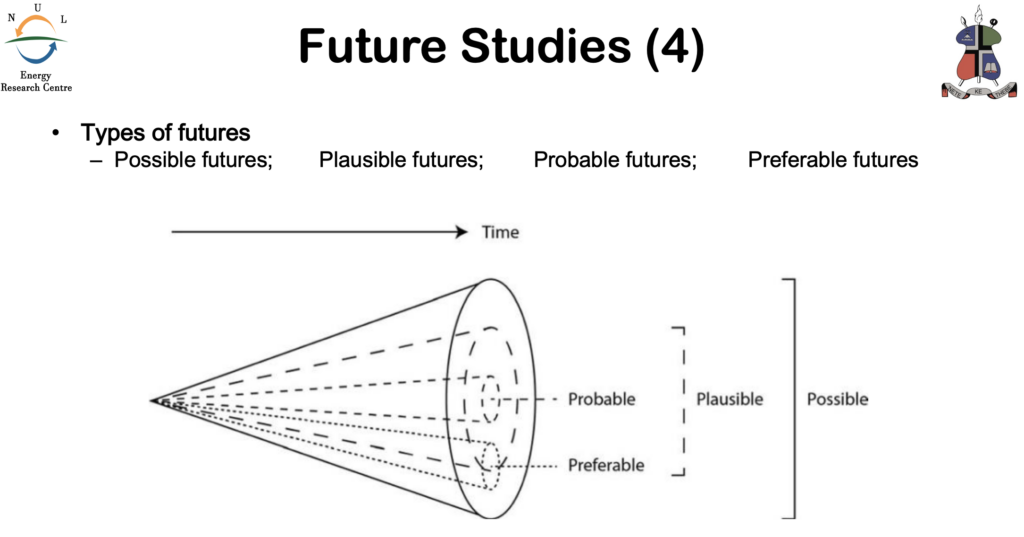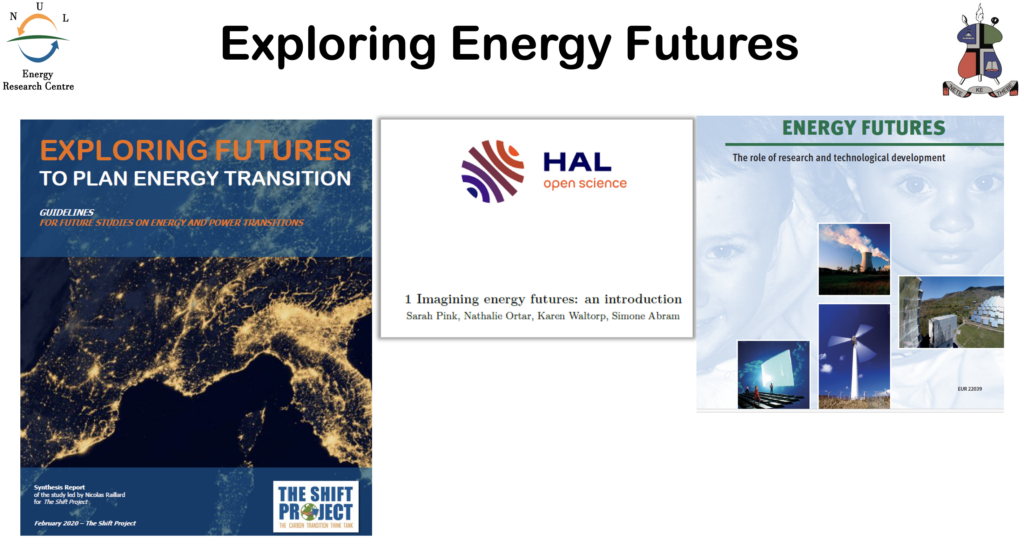
The LETSEMA team successfully piloted the newly developed future studies materials for the Energy Planning and Policy course at NUL with students from 6 to 10 October 2025. As part of the LETSEMA activities, the sustainable energy master’s programme curricula have been reviewed not only for their technical content but also for a futures lens to ensure students can holistically analyse different energy futures and their implications. The Energy Planning and Policy course integrated futures aspects throughout its delivery, from course readings, lectures and its assignments.
(Click here to read more)
Some new areas touched upon included:
- Global Energy Drivers Classification (Political, Economic, Social, Technological, Environmental, Cultural and Values)
- Exploring Energy Futures (Energy System and Transition; Energy and Future-oriented Studies; Future-oriented Studies; Concepts for Examining Change)
- Energy Demand Analysis (Forecasting Cases and Methodologies; Time Series Analysis; Regression Analysis; Machine Learning; AI-Powered Energy Forecasting)
- Why Forecast Energy? Common Challenges in Energy Forecasting
- Energy Forecasts, Outlooks and Scenarios (Long-term and Net-zero Scenarios; Participatory Energy Planning and Suggested Techniques)
The student feedback considered futures studies as a positive addition to the course as commented by a student below:
“The Energy Planning & Policy course I attended in October at NUL introduced me to Energy Futures and changed how I think about forecasting. Coming from a financial modelling background, I was mainly focused on historical trends and economic outlooks, paying limited attention to wider PESTECV factors. The futures module helped me broaden this approach by showing how political, social, technological, environmental and behavioural factors can materially shape long-term energy outcomes.
The major assignment, which required analysing Lesotho’s long-term energy and electricity demand using alternative future scenarios, gave me a practical way to apply these ideas. I chose the Green-Leap scenario, and working through it helped me better understand how scenario-based futures thinking strengthens energy planning and policy analysis under uncertainty. “
– Teboho Thatho (Student in the Energy planning and Policy course)