
On 15 August 2025, during the Research Methodologies course for the new master’s students in Sustainable Energy at the National University of Lesotho (NUL), Joni Karjalainen and Kalpani Pavithra from the Finland Futures Research Centre at the University of Turku facilitated a two-hour introduction to futures studieswith a focus on energy futures.
Through short inputs and hands-on exercises, the students engaged into an introduction to why it can be beneficial to think about sustainable energy designs from a future-oriented perspective.
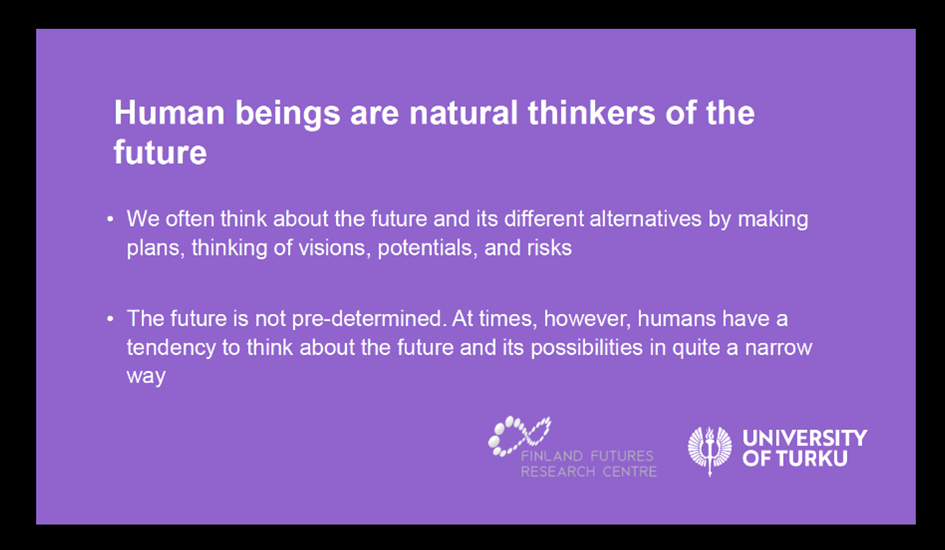
In learning about different types of methods, it is possible to purposefully experiment, immerse, and orient to the future, also in joint spaces. By using existing methods, techniques and tools, anyone from an individual student to an energy expert can begin to systematically orient to the future.
“As a specific benefit, it will be easier to explore the futures of a rapidly changing energy landscape. In scanning for emerging issues, it is also possible to identify opportunities, and begin to think how to better make use of them”, Joni Karjalainen explains.
In this session, the NUL students practised horizon scanning and experimented with designing their own mini futures workshops, applying these tools to pressing questions of the energy challenges in Lesotho.
“Futures workshops can influence Lesotho’s energy future by bringing together experts, stakeholders, and communities. And it was inspiring to see bright minds designing their own mini futures workshops and contributing so creatively to Lesotho’s energy futures”, Kalpani Pavithra mentions.
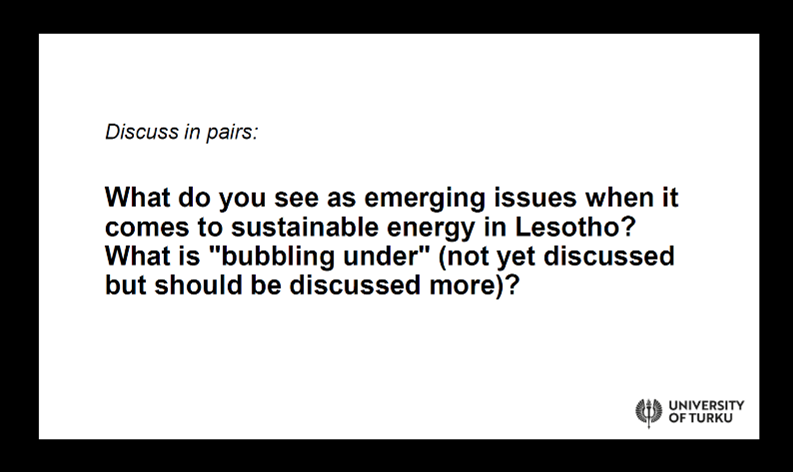
When designing their own workshops, students surfaced diverse and thought-provoking themes for the future of energy, from issues of dependency and integration to opportunities for renewable expansion.
Scenario approaches were also shortly introduced, with a link to the upcoming course on Energy Planning and Policy, and the shared aim of integrating futures thinking more systematically into future teaching was emphasised. By combining or adapting different methods, one can also design their own methodologies.
In the new cohort, there are 12 master’s students, and the session included the staff of NUL Energy Research Centre (ERC), as LETSEMA project partners, in an active, collaborative format. In learning about new methods, students also acquire valuable work-life skills in a very practical way.
The session reflections offered valuable insights about the interest in energy futures and evidenced the potential of these tools to complement technical approaches to energy planning and to open space for new perspectives on the challenges and opportunities ahead.